

Hi everyone;
I think you’re all aware of “stress” is hitting harder now than ever
More and more people with a hijacked focus, wrecked your productivity, messed up health/ gut, and even changes in how they look & show up to the world (acne breakouts, dull or dry skin, hair loss, under-eye bags from poor sleep, weight changes etc..).
It’s not just a “little something” you can ignore, but a full-blown disruptor that seeps into every corner of your life
Now; When talking about dealing w stress - if you’re not someone who usually struggles with it in general (unlikely) - This post might not make much sense at all
& Same goes for those who don’t have time to look into topics such as this one, or are simply stuck in fight-or-flight… Breathwork won’t seem very appealing. This applies to everything.. If you don’t think of something as “important” , you just won’t put of your mind/time into it
Still fact is everyone reading this could benefit from the basic concepts of breathwork - from the people with busy/high-pressure lifestyles (school, work, biz, etc..) to the person dealing w social anxiety.
Plus; It won’t take you more than a few minutes a day on it, and the ROI is hard to beat.
& If you’re truly not convinced about importance of being of your breath and breathwork in general - I’d strongly advise you to go do some research..
But I think if you just listened to at few interview of “successful people” whether in sport, business, or anything you already know what I’m talking about
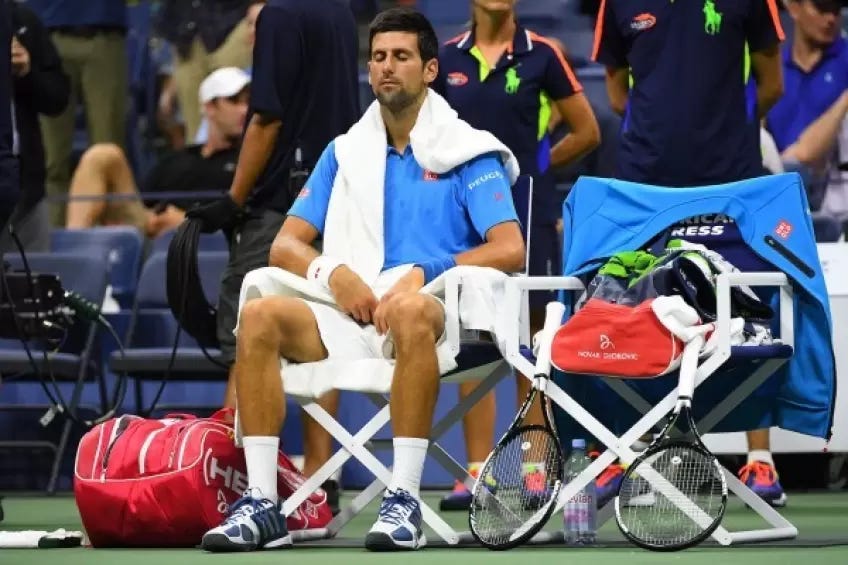
Why is breathwork so important?
You can spend a decent amount of time figuring out how to deal w stress, and live as peacefully as possible - But the truth? If there was an easy solution stress wouldn’t be such an issue.
Fact is, reducing stress comes down to the multiple factors that must embrace each other for you to get positive change
But if you ignore it instead?
You’re screwed...
Your stress compounds.
Your productivity tanks.
Your confidence drops.
Your social anxiety gets worse.
Your brain stays in fight-or-flight all day.
You feel stuck and you blame yourself.
You can’t think clearly.
You can’t focus/sleep properly.
You can’t make good decisions.
You can’t stay calm in tense situations.
In short, you’d put your whole well being at risk
& thats why again breath work’s so important.
Understand - So much is dictated by your breath alone. The entire exhale response, is a release of CO2 to lower cortisol. Box breathing kills stress. nasal only breathing makes you beautiful. “
“Your breath is ultimately the ultimate consciousness tool at your disposal”
Most people do ZERO breathwork ever & wonder why they’re so anxious/neurotic
Ofc get in your head that I’m not presenting myself as a doctor nor specialist on the topic. & this surely is not medical advice.. But I’m just here to help as someone who’s been dealing w stress, and pressure for a long time, and who is still dealing w it now to some degree
& I think it’s pretty obvious it doesn’t take some PhD to understand that breathing is a natural system that helps coordinate your body & mind, influencing how different parts work together. Through your breath alone, you can affect stress levels, heart rate, oxygen delivery, and even emotional balance.
Plus, it helps with cognitive focus and mental clarity. So again, it doesn’t take much to realize the importance of proper breathing, and what kind of results one could get with minimal practice & effort.
To summarize this part:
Dealing with stress isn’t a myth, and there is a good reason why “successful people” are using breathwork.
& that same reason is why you should want to understand the concepts around it & why it is important to be aware of its power:
Reduces stress
Speeds up recovery
Makes you sleep better
Puts you in the present moment
Provides clarity
Calming effect
Get rid of your preconceived ideas/beliefs:
Before thinking that breathwork is stupid, and that it can’t possibly help you dealing w your stress/anxiety - Understand that while it works, it takes a bit of time & practice to notice a REAL difference
Time & practice that most people aren’t willing to put on anything as they prefer prefer going for quick, and easy solution (thus why pills are so popular)
I’m telling you this coz I was the first one to look down on it..
But after years of reading out breathing exercises and finally trying them when times got tough.. Let me tell you that breathwork is easy to start, and it’s even easier to notice the difference.
& if you’re still not convinced?
Go watch interview of “Tony Robbins, LeBron James, David Lynch, Novak djokovic, Joe rogan, Hugh Jackman, Stephen curry, etc..” They all used breathing exercises and have been public about it.
So once again. Don’t close yourself before giving it a try
How to get the most out of breathing exercises: 7 easy steps
1. Become aware of your breathing patterns
Notice how you naturally breathe throughout the day:
Is your breathing shallow?
Do your shoulders rise when you inhale?
Are you breathing mostly into your chest instead of your belly?
Is your posture restricting your breath?
Awareness is the foundation - it tells you what needs adjusting.
2. Start with simple, beginner-friendly techniques
If you’re just starting, stick to reliable, easy exercises:
Box Breathing (4-4-4-4)
4-7-8 Breathing
Diaphragmatic / Belly Breathing
Keep them short: even 2–3 minutes per session is enough when beginning.
3. Use guided sessions at first:
This makes learning easier and prevents overdoing it.
A guided voice or video also keeps your pace steady and helps you stay present.
4. Build a routine:
Pick a consistent time (morning, before bed, after lunch, etc.).
A short daily session builds habit faster than a long, occasional one.
5. Practice self-awareness as you go
Check in with yourself before and after each session:
How do you feel emotionally?
Are you more/less tense?
How does your breathing feel now compared to earlier?
Tracking small changes helps you notice progress.
6. If sitting still is hard, try moving
Most breathing exercises can be done while walking—
In fact, combining movement + breath can make it easier to stay focused.
7. Take a break/delay if you feel anxious
Lightheadedness, tingling, or rising anxiety means you should pause. Your tolerance improves with practice, so go slow at first.
8. Start small & increase gradually”
People often push too hard early on. Thus; don’t stick it for enough time
“Begin with 1–2 minutes and add 30 seconds each week.”
Breathing Exercises And Breathwork Prerequisites:
Fundamentals: 3/3 required
Before diving in breathwork in general there are 3 prerequisites
Prerequisite #1: Deep Breaths
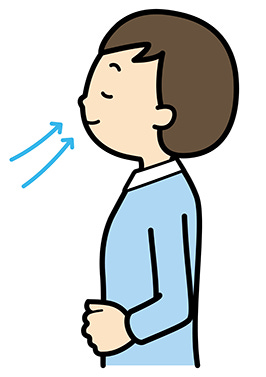
It sounds almost stupidly simple… until you realize how few people actually do it. Only a small part of the population breathes deeply on a daily basis — everyone else is stuck in shallow, upper-chest breathing without even knowing it.
The crazy part? Your body adapts to that. Over time, it gets used to running on minimal air and becomes “efficient” in all the worst ways. Your nervous system stays tighter, your posture adjusts around the restriction, and your breathing pattern gets locked into something that feels normal but isn’t healthy.
A quick test: take 3–5 deep breaths in a row. Notice what happens.
If you feel resistance, tension, or like you “have to try” to breathe fully, that’s your sign. It means your pattern is off. The mechanics aren’t where they should be, and you’ve probably been operating in that shallow mode for a long time.
This is the foundation. Before trying advanced breathwork, you need the ability to actually breathe deeply without strain. Everything else builds on this.
Prerequisite #2: Nose Breathing
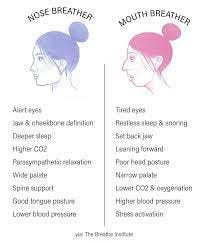
Another thing that sounds ridiculous to even bring up… until you look closer. Most people think they breathe through their nose. In reality, a surprising number don’t — and in certain parts of the world, mouth breathing is almost the default. If you have 10 minutes, go down that rabbit hole. It’s eye-opening.
Nose breathing is supposed to be automatic. Natural. Effortless. Something your body does without needing reminders.
But here’s the catch: if you find yourself forcing air through your nose, or it feels blocked, uncomfortable, or unnatural, that’s a sign something’s off. It could be inflammation, poor habits, structural issues, or low-level health problems you’ve been ignoring.
This isn’t something to take lightly. Consistent nose breathing affects sleep, energy, mood, recovery — everything.
So if you want to get better at breathwork? Start by making your nose your primary air source again. Everything else depends on it.
Prerequisite #3: Belly Breathing (Diaphragmatic)
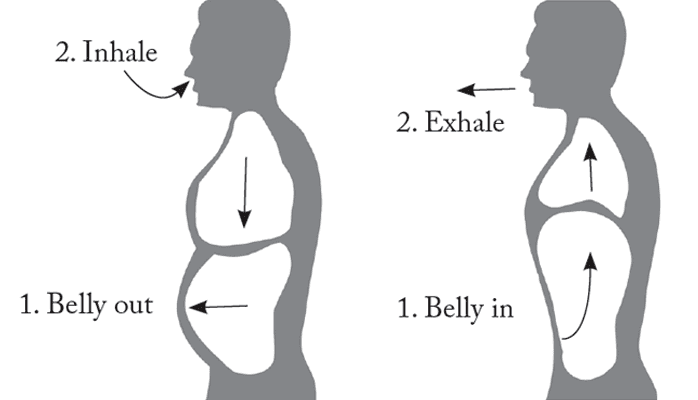
This is how babies breathe. Perfectly. Naturally. Effortlessly. And somewhere along the way, most adults lose it. Stress, posture, sitting too much — all of it slowly shifts breathing upward into the chest instead of the diaphragm.
Understanding how to breathe with your diaphragm isn’t optional - It’s the foundation - The baseline - The thing everything else is built on.
If you can’t get your belly to move when you inhale, the rest of breathwork becomes nothing more than techniques stacked on the wrong mechanics.
Master this, and every form of breathwork becomes more effective. Ignore it, and you’ll keep breathing in a way your body was never designed for.
Prerequisite 4: Posture & Airway Position
This is the one people overlook… and it’s the one that makes everything else work better.
If your posture collapses, your ribs can’t expand.
If your neck is forward, your airway narrows.
If your spine is compressed, your diaphragm has less room to move.
Most people try to breathe deeply while sitting like a question mark — and then assume they “aren’t good” at breathing. But the truth is simple: your body position can restrict your breath before you even begin.
So quick posture check:
Sit or stand tall (not stiff).
Imagine a string lifting the top of your head.
Relax your jaw.
Keep your ribs stacked over your pelvis.
This instantly increases lung space and diaphragm movement — no technique needed.
Once posture is out of the way, the three core prerequisites become much easier.
Breathwork basics: find out what works for you
Not to repeat myself, but if it’s truly first time stepping into breathwork - Then, in practice, those basic breathing exercises will already be a huge improvement, and will keep you more relaxed/energized throughout the day /before sleep
Ofc goal here isn’t to describe each method in detail but to provide a general outline and a few things you can experiment with. & since supposed to start w guided sessions, you won’t really need more details (will put some links)
Box Breathing (Square Breathing)
“Breathe in. Hold. Breathe out. Hold”.
It doesn’t get more straightforward than this — and there’s a reason it’s the first on the list. Box breathing is one of the easiest ways to pull your attention back into your body, calm your nerves, and reset your focus in under a minute.
This is the entry point for most people because it instantly shows you something important: “you’ve probably never used your full breathing capacity”.
Holding the breath at each corner of the “box” forces you to feel the shape of your inhale & exhale. You become aware of how uneven your breathing really is, how rushed or shallow it can become, and how much control you actually have when you slow it down.
It’s simple, it works, and it gives you a quick taste of what breathwork can do — without needing any experience.
Great for beginners, great for busy people, and honestly great for anyone who needs to reset your internal pace.
In fact; I even use it before I start my workout (works great as a preworkout)
How to do it exactly: —>Breathe in for 4 seconds —>Hold for 4 seconds—>Breathe out for 4 seconds —>Hold for 4 seconds—>Repeat.
The Physiological Sigh:
I actually love this one..
I often used before stepping in social environments at the time I was struggling w social anxiety
I found about it through DR.Huberman
It’s the fastest scientifically-backed way to calm your nervous system in real time.
It’s not a long breathwork session, not meditation, not a ritual — it’s literally “one specific breathing pattern your body already uses naturally” when you cry, when you’re about to fall asleep, or when your system needs to dump stress fast.
Huberman didn’t invent it — he just popularized it and explained the neuroscience behind it. He calls it the “single most effective way to reduce stress immediately”.
I love it because:
it works in 5–10 seconds
it lowers anxiety fast
you can do it anywhere
it doesn’t require any practice
Out of all the breathwork methods, this one gives the quickest state change.
How to do it exactly:
—>1. Inhale through your nose (Fill your lungs about 70–80%)
—>2. Take a second, shorter, sharper inhale through your nose (this “tops off” the tiny air sacs in your lungs (alveoli) that didn’t open during the first inhale)
—>3. Long, slow exhale through your mouth. Make the exhale longer than both inhales combined. Try to empty your lungs fully. Do 1–3 rounds.
It works coz when you do that second quick inhale, you pop open collapsed alveoli in the lungs. This lets your lungs offload CO₂ more efficiently — and CO₂ buildup is a major driver of anxiety and stress.
By lowering CO₂ quickly, your brain switches out of stress mode almost instantly.
Huberman’s lab at Stanford showed that this technique:
reduces physiological stress markers fastest
works better than box breathing for sudden stress
takes the least time and effort
From experience you can really use it in many situations..
whether it’s a sudden anxiety spike, before a stressful conversation, if you’re struggling w social anxiety, when you can’t think straight/overthinking, pre-performance, etc..
If breathwork were a toolbox, this would be the “pull this out ASAP” tool.
4-7-8 Breathing
This one is great for slowing your whole system down.
While I didn’t personally use it as much as the two above, I know many people who find it even more relaxing — especially before sleep. It’s often recommended as a pre-bed routine because it naturally eases the body into a calmer state.
How to do it: Inhale through your nose for 4 seconds —>Hold your breath for 7 seconds—>Exhale slowly for 8 seconds —>Repeat for a few rounds.
The advanced techniques:
1. Kapalabhati (Skull-Shining Breath)
Think of Kapalabhati as the “wake your system up now” technique - It’s fast, sharp, and energizing.
Many people swear by it as the best way to “switch out of sluggishness” first thing in the morning. & ofc there are others who find it too stimulating or too “yogic” for their taste.
But the truth is: it works. It clears out mental fog, gets your diaphragm moving, and boosts your alertness almost instantly.
If you want something that activates you without needing coffee, this is the one.
2. Wim-Hof–Style Rhythmic Breathing (gentle version)
This one is the “big wave of oxygen” method.
It’s pretty intense, and mood-changing. Might be the less subtle of the three.
A type of instant switch to your state. & while useful might be harder to sustain for a daily practice
But if you want a powerful shift in energy, emotion, or focus, or you love that “alive” feeling afterward… it’s hard to beat.
3. Controlled Breath Holds (CO₂ Tolerance Training)
This one is the “build your calm under pressure” technique.
Not flashy, not dramatic — but extremely effective. Almost all advanced breathwork + freediving training is built on this principle: “learning to stay relaxed when CO₂ rises.”
People who stick with this report smoother breathing, better stress management, more emotional control, and easier meditation.
It’s the most “scientific” and arguably the most impactful long-term, but it requires patience. Nothing extreme — just slow progress, and it works.
That’s it; Thanks for reading me